small pieces of biology
biology
Hey! My name is Myriame, yes, with an "e", —unusual but not pointless, just like everything around us. I believe every single atom on this earth has a purpose. That's why I chose Science as my college program. Therefore, I want to teach, gift knowledge to the future generations. I want my students to see through my lenses. Yes, my dream is to become a biology teacher—someone who can show young souls that life itself is the greatest classroom. This glossary is the first piece of knowledge I want to share to the world.
- cell
- noun
- The smallest structural and functional unit of an organism, typically microscopic and consisting of cytoplasm and a nucleus enclosed in a membrane. Microscopic organisms typically consist of a single cell, which is either eukaryotic or prokaryotic.
- Example: Chloroplasts produce carbohydrates and sugars to be used as an energy source by the cell.

- eukaryotic
- adjective
- Of, relating to, or characteristic of a eukaryote, an organism whose basic structural unit is a cell containing specialized organelles and a membrane-bound nucleus.
- Example: The effects of antibiotics on cells vary depending on whether is it prokaryotic or eukaryotic as they have specificity for the functioning of their ribosomes in protein synthesis.

- organism
- noun
- An individual animal, plant, or single-celled life form.
- Example: Unlike the Crucian carp, the organism's neuronal activity is suppressed to the maximum to maintain at the appropriate level of ATP needed.

- protein
- noun
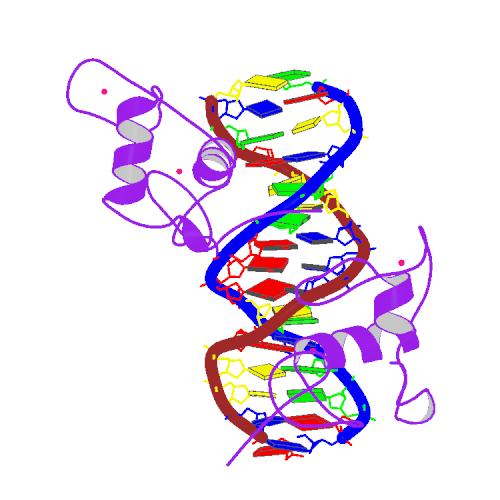
- A protein is a macromolecule made up of one or more chains of amino acids, acting as the building blocks of cells and performing vital functions such as providing structural support, acting as enzymes to catalyze chemical reactions, and transporting molecules throughout the body.
- Example: Carnivores demand a high intake of protein requirement in comparison to herbivorous and omnivorous animals, with essential amino acid deficiencies more common in carnivores.
- prokaryotic
- noun
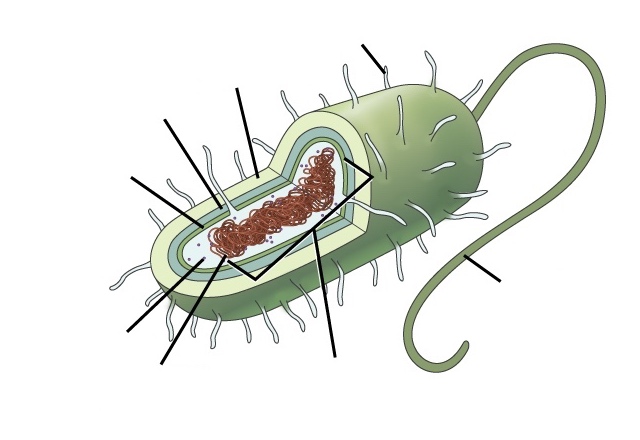
- A microscopic single-celled organism that has neither a distinct nucleus with a membrane nor other specialized organelles. Prokaryotes include the bacteria and cyanobacteria.
- Example: Due to the small size of the prokaryotic cell and its high surface area to volume ratio it can obtain all the nutrients and gases it needs through simple diffusion, so the cell contains no complicated transport mechanisms.
- calcification
- noun
- The hardening of tissue or other material by the deposition of or conversion into calcium carbonate or some other insoluble calcium compounds.
- Example: Mammography is extremely effective at showing lumps and areas of calcification within the breast, therefore in most circumstances it is possible to predict the nature of a lesion solely by its appearance on the mammogram.

- nucleus
- noun
- A nucleus is the central control center of a eukaryotic cell that contains most of the cell's genetic material, or DNA, organized into chromosomes.
- Example: Most DNA in eukaryotes is found in the nucleus.

- osmosis
- noun
- A process by which molecules of a solvent tend to pass through a semipermeable membrane from a less concentrated solution into a more concentrated one, thus equalizing the concentrations on each side of the membrane.
- Example: Osmosis dictates that water follows sodium ions and is thus reabsorbed passively.

- photosynthesis
- noun
- Photosynthesis is the process used by plants, algae, and some bacteria to convert light energy, usually from the sun, into chemical energy in the form of sugars.
- Example: Mammals have the regulation of body temperature from homeostasis, and plants regulate the conversion of carbon dioxide into oxygen via photosynthesis.

- mitosis
- noun
- A type of cell division that results in two daughter cells each having the same number and kind of chromosomes as the parent nucleus, typical of ordinary tissue growth.
- Example: They are also not split equally between cells when they divide at mitosis and so one cell may inherit all maternal mitochondria.

- meiosis
- noun
- A type of cell division that results in four daughter cells each with half the number of chromosomes of the parent cell, as in the production of gametes and plant spores.
- Example: The sporophytes of green algae form spores only by meiosis.

- community
- noun
- A group of interdependent organisms of different species growing or living together in a specified habitat.
- Example: It is not only a matter of maximum yields and efficiency, it is more likely a matter of obtaining the best possible results, at lowest possible risk levels, with scarce resources and harsh conditions and considering the social and cultural context of the community.

- ribosome
- noun
- A minute particle consisting of RNA and associated proteins found in large numbers in the cytoplasm of living cells. They bind messenger RNA and transfer RNA to synthesize polypeptides and proteins.
- Example: There is strong evidence supporting the theory like ribosome size, gene structure and the presence of double membranes.

- biome
- noun
- A biome is a large geographic area on Earth defined by its specific climate, landscape, dominant vegetation, and characteristic animal life, which share similar adaptations to thrive in that environment.
- Example: Small range size is associated with forest biome, and the few species that inhabit savannah or woodland habitats tend to be more widespread.

- chlorophyll
- noun
- A green pigment, present in all green plants and in cyanobacteria, responsible for the absorption of light to provide energy for photosynthesis. Its molecule contains a magnesium atom held in a porphyrin ring.
- Example: This parasite is unable to photosynthesise for itself and therefore lacks chlorophyll.

- embryo
- noun
- The early developmental stage of an animal while it is in the egg or within the uterus of the mother. In humans the term is applied to the unborn child until the end of the seventh week following conception; from the eighth week the unborn child is called a fetus.
- Example: The final issue surrounding the use of stem cells in medicine is the worry that patients may acquire infectious agents from infected embryo-derived pluripotent stem cells or the bovine serum feeder layers required for growth

- parasite
- noun
- A parasite is an organism (like a plant, animal, or microbe) that lives on or in another organism (its host), deriving nutrients or other resources from the host, often to the host's detriment or harm.
- Example: There is an interesting and continually evolving relationship that can be seen between the parasite and the host, as both develop immunity against each other and the defences raised.

- pollination
- noun
- The transfer of pollen to a stigma, ovule, flower, or plant to allow fertilization.
- Example: The process by which most plants reproduce is termed "pollination".

- zygote
- noun
- A diploid cell resulting from the fusion of two haploid gametes; a fertilized ovum.
- Example: The result was one-cell embryos, known as zygotes, with a defective gene responsible for the heart condition from the man along with a healthy copy of the gene from the woman.

- gamete
- noun
- A gamete is a reproductive cell of an animal or plant. In animals, female gametes are called ova or egg cells, and male gametes are called sperm. Ova and sperm are haploid cells, with each cell carrying only one copy of each chromosome.
- Example: It can occur when an egg is fertilised with two sperms or where a gamete division does not occur correctly resulting in a diploid gamete.


Lovely post! I'm sure your glossary will be helpful for those in your field.
ReplyDelete